AI in Modern Warfare: Intelligence & Khamenei Reports

Written by
Sumit Patel
Published
March 21, 2026
Reading Level
Advanced Strategy
Investment
6 min read
The Brief
Learn how AI is used in military intelligence. Separate facts from myths about Khamenei tracking reports and understand AI's real role in global security.
Artificial intelligence is used in modern warfare mainly to assist intelligence agencies in analyzing massive datasets from satellites, signals, and surveillance systems. It helps identify patterns, predict movements, and support decision-making, but it does not independently execute military operations. Recent claims about AI tracking Iran’s Supreme Leader have sparked debate, but most remain unverified and exaggerated.
How AI Tracking Claims About Khamenei Spread Online
In recent weeks, several online discussions and social media posts have suggested that U.S. intelligence agencies used advanced artificial intelligence systems to determine the precise location of Iran’s Supreme Leader. According to these claims, AI systems similar to modern large language models were used to analyze surveillance data and identify the movements of high-value targets.
However, most of these claims are unverified. Experts clarify that AI is used as a support tool, not an autonomous system making military decisions.
- Analyze massive intelligence datasets collected from multiple sources
- Process large volumes of surveillance camera footage
- Study movement patterns of high-value targets
- Predict possible meeting locations
- Combine signals intelligence with geographic tracking data
How AI Is Used in Military Intelligence Operations
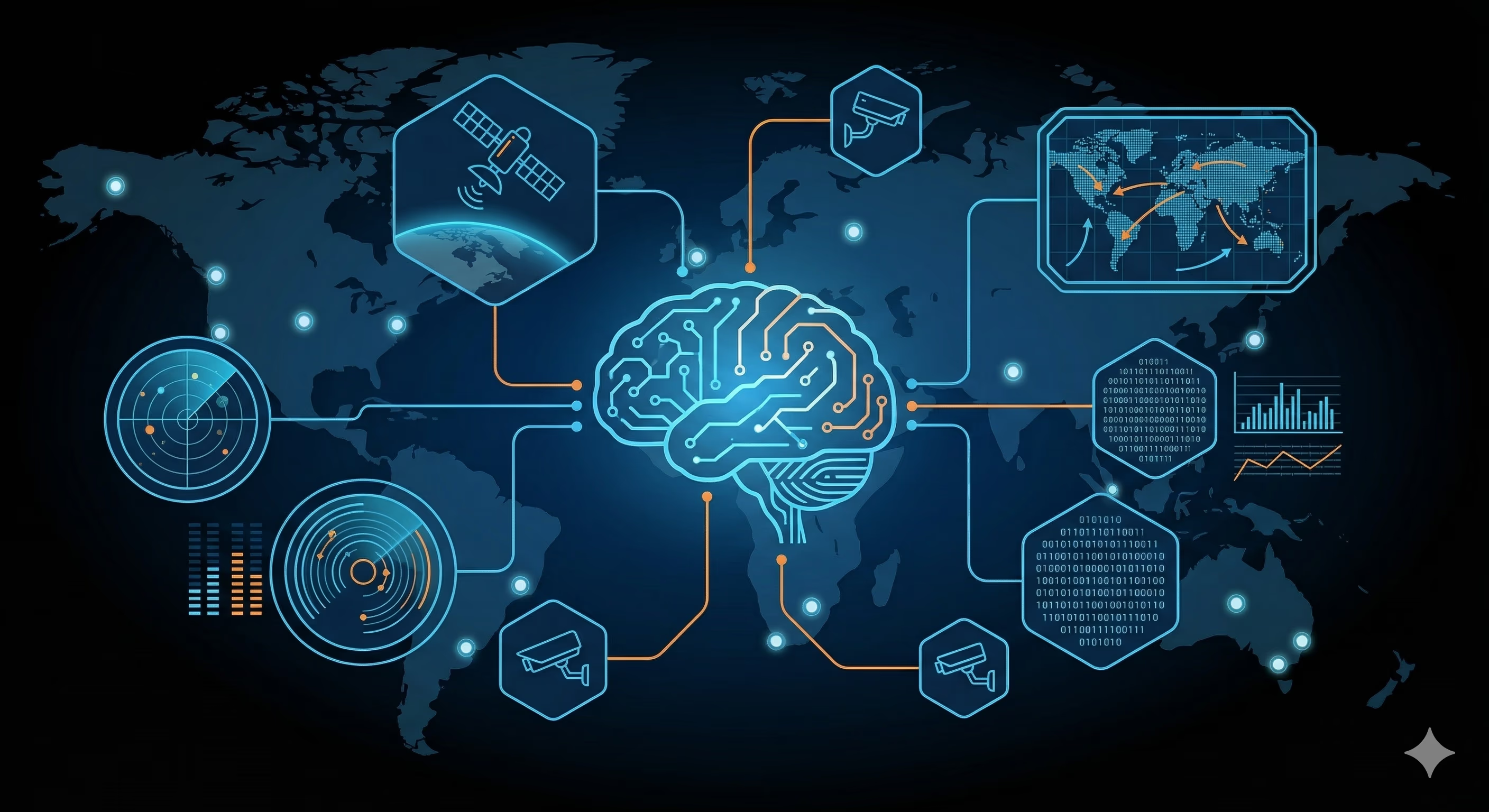
Artificial intelligence is increasingly used because modern surveillance systems generate enormous volumes of data daily. AI helps intelligence agencies process, filter, and interpret this information quickly and accurately.
- Satellite imagery analysis
- Intercepted communication processing
- Traffic camera monitoring
- Geolocation signal tracking
- Travel and movement pattern analysis
Key AI Capabilities in Modern Intelligence Analysis
What Is Pattern Recognition in Military AI
Machine learning algorithms detect patterns in massive datasets. They analyze historical travel behavior, identify repeated routes, and flag unusual activity that may indicate strategic movement or coordination.
How Predictive Analysis Works in Warfare
Predictive models estimate future locations of targets based on past behavior, known contacts, and historical data. This helps intelligence teams prepare and respond faster.
How AI Analyzes Images and Video Surveillance
Computer vision allows AI to scan thousands of hours of footage. It identifies faces, vehicles, and geographic markers linked to intelligence targets.
Why Data Correlation Matters in Intelligence
AI combines satellite data, signals intelligence, and surveillance feeds into a unified analysis, helping analysts see a complete operational picture.
Why AI Does Not Independently Launch Attacks
Modern military systems follow the 'human in the loop' principle, ensuring that critical decisions remain under human control.
AI assists by narrowing down options, but final decisions are always made by trained human analysts and commanders.
- Confirming target identity
- Validating intelligence data
- Approving military operations
- Authorizing military strikes
Why AI Is Critical in Modern Warfare Strategy
The role of AI is growing due to the need for faster and more accurate intelligence processing in complex global environments.
- Explosion of surveillance data worldwide
- Need for rapid decision-making
- Improved targeting accuracy
- Strategic intelligence advantage
- Real-time global data processing
Global Investment Trends in Military AI Technology
Countries worldwide are heavily investing in AI-driven defense systems to gain strategic advantages.
- United States expanding AI-based intelligence programs
- China investing in military AI research
- European nations building AI-supported defense systems
- Tech companies collaborating with defense sectors
Ethical Concerns About AI in Warfare Systems
The integration of AI in warfare raises serious ethical and operational concerns globally.
Experts emphasize maintaining human control over life-and-death decisions to avoid unintended consequences.
- Risk of algorithmic errors
- Reduced accountability concerns
- Potential autonomous weapons development
- Calls for international AI regulation
Fact vs Myth: AI in Military Intelligence
Many viral claims about AI exaggerate its actual capabilities in warfare.
- AI supports analysts, it does not replace them
- Humans approve all military actions
- Weapons systems remain conventional
- Online narratives often oversimplify AI
AI vs Human Roles in Military Intelligence (Comparison Table)
| ai function | description | human role |
|---|---|---|
| Data Processing | Analyzes massive datasets from multiple intelligence sources | Verify and interpret the analysis |
| Image Recognition | Identifies faces, vehicles, and locations | Confirm identity |
| Predictive Analysis | Predicts future movements | Evaluate context |
| Data Correlation | Combines multiple intelligence inputs | Approve decisions |
Frequently Asked Questions About AI in Warfare
Strategic Summary
Final Thoughts
Artificial intelligence is transforming modern warfare by enabling faster and more accurate intelligence analysis. While claims about AI tracking high-profile leaders often lack verification, the technology plays a critical supporting role in surveillance and decision-making. Human oversight remains central, ensuring accountability and control. As AI evolves, balancing innovation with ethical responsibility will be essential for global security.
Next up